The Tibetan script is immediately recognizable. Its strong horizontal lines, beautifully balanced forms and intricate stacked letters give written Tibetan a character unlike almost any other writing system. But Tibetan writing is more than visually distinctive. For well over a thousand years, it has been the vessel through which an enormous body of Buddhist philosophy, …
More-
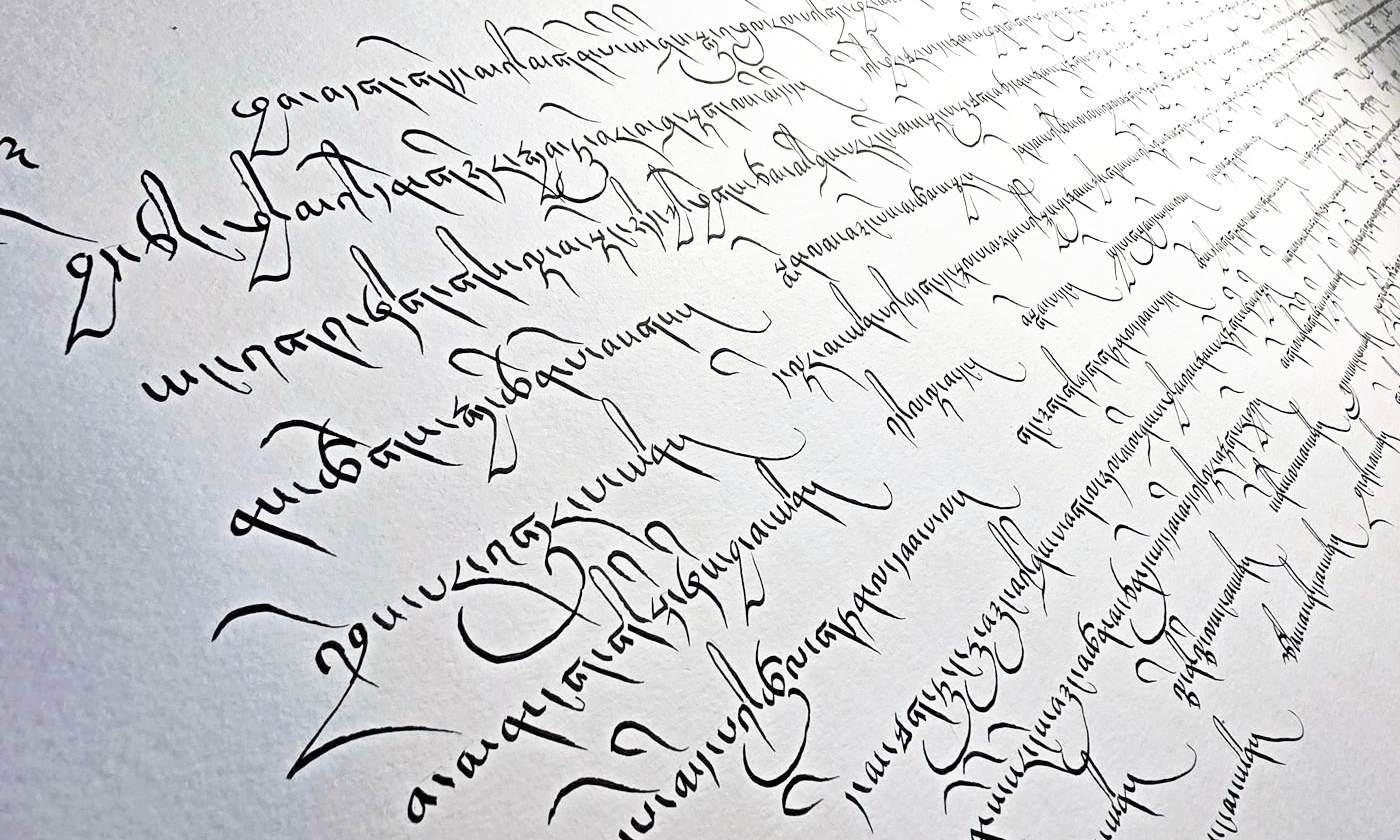
The Tibetan Alphabet & Script: A Complete Visual Guide
-

Traditional Tibetan Paper: The Ancient Craft Behind Tibet’s Sacred Manuscripts
When we look at an old Tibetan manuscript, our attention naturally goes first to the writing. The beautifully proportioned letters. The deep black ink. The long horizontal lines of Tibetan script. Perhaps gold lettering against a dark indigo ground. Perhaps the carved impressions of a woodblock printed hundreds of years ago. But underneath all of …
More -

The Different Styles of Tibetan Calligraphy: Uchen, Umê, Drutsa & More
To someone encountering Tibetan writing for the first time, its distinctive forms may seem to belong to a single script. Look more closely, however, and an extraordinary variety begins to emerge. Tibetan calligraphy encompasses numerous writing styles, ranging from the precise geometry of formal Uchen to the sweeping curves and elongated strokes of Drutsa and …
More -

The Fascinating Linguistic Similarities Between Tibetan and Nepali
Tibet and Nepal share more than just a border — they share centuries of trade, migration, and cultural exchange. And this has left its mark on the way people speak in both regions. Even though Tibetan (part of the Tibeto‑Burman family) and Nepali (an Indo‑Aryan language) come from completely different linguistic roots, they have developed …
More -

An Overview of Sino Tibetan Languages
The Sino-Tibetan Language Family The Sino-Tibetan language family is one of the largest and most significant language families in the world, both in terms of number of speakers and historical-cultural influence. It is second only to the Indo-European family in terms of total speakers, owing largely to the global importance of Chinese languages. This family …
More -

The Linguistic Similarities Between Tibetan and Bhutanese
The Tibetan and Bhutanese languages share deep historical, cultural, and linguistic connections. Both languages belong to the Tibeto-Burman language family and have evolved in close proximity to each other. Bhutanese, also known as Dzongkha, is the national language of Bhutan, while Tibetan, particularly Standard Tibetan, is spoken primarily in Tibet and neighboring regions. Although distinct …
More -

Major Features of the Tibetan Language
Major Features of the Tibetan Language The Tibetan language is a member of the Sino-Tibetan language family, primarily spoken by Tibetans in the Tibetan Plateau and surrounding regions, including parts of India, Nepal, and Bhutan. Tibetan is known for its rich literary tradition, unique script, and complex phonetic and grammatical structures. It is an integral …
More -

The Link Between Tibetan and Sanskrit Written Languages
The Tibetan and Sanskrit written languages share a deeply intertwined history, particularly within the context of Buddhism. Sanskrit, one of the oldest Indo-European languages, played a pivotal role in shaping the Tibetan script and literary tradition. This relationship extends beyond mere linguistic similarities and encompasses cultural, religious, and scholarly exchanges that profoundly influenced Tibetan civilization. …
More -
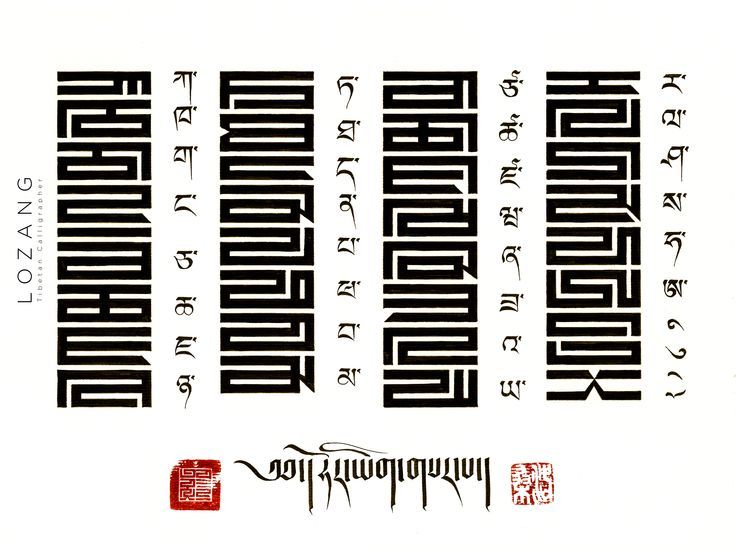
A Short History of The Traditional Horyig Script
The Horyig script, also known as Mongolian Square Script, is a unique calligraphic style historically used in Mongolia and Tibet, primarily for official seals and inscriptions. It is deeply connected to the Mongol Empire’s influence over Tibet and the adaptation of script traditions within Tibetan Buddhism. Origins and Development in Mongolia The origins of the …
More